This page provides information about the District of Squamish’s Urban Forest Management Strategy. We will update as the project progresses, including details about upcoming opportunities to get involved.

Overview

The District of Squamish is developing its first Urban Forest Management Strategy to guide tree protection, planting, and care on public and private land over the next 25 years. Trees and forests are central to Squamish’s natural character and outdoor way of life. They provide shade, support wildlife, help manage rainwater, and create spaces for people to get outside and connect with nature.

Your input will help to shape a shared vision and create practical actions to protect, grow, and care for Squamish’s urban forest. Share what you value about local trees and forests, and your priorities for keeping them healthy for future generations.

Urban Forest Components

As Squamish grows, protecting existing trees and making space for new ones requires coordination across streets, parks, natural areas, and private properties. Tree management must also address climate change and wildfire risk while supporting wildlife habitat, protecting waterways, maintaining slope stability, and meeting community needs.

The Strategy will help the District set priorities and plan the resources required for long-term tree care. It will also consider where additional trees could help more people benefit from shade and access to nature.

What is the urban forest?

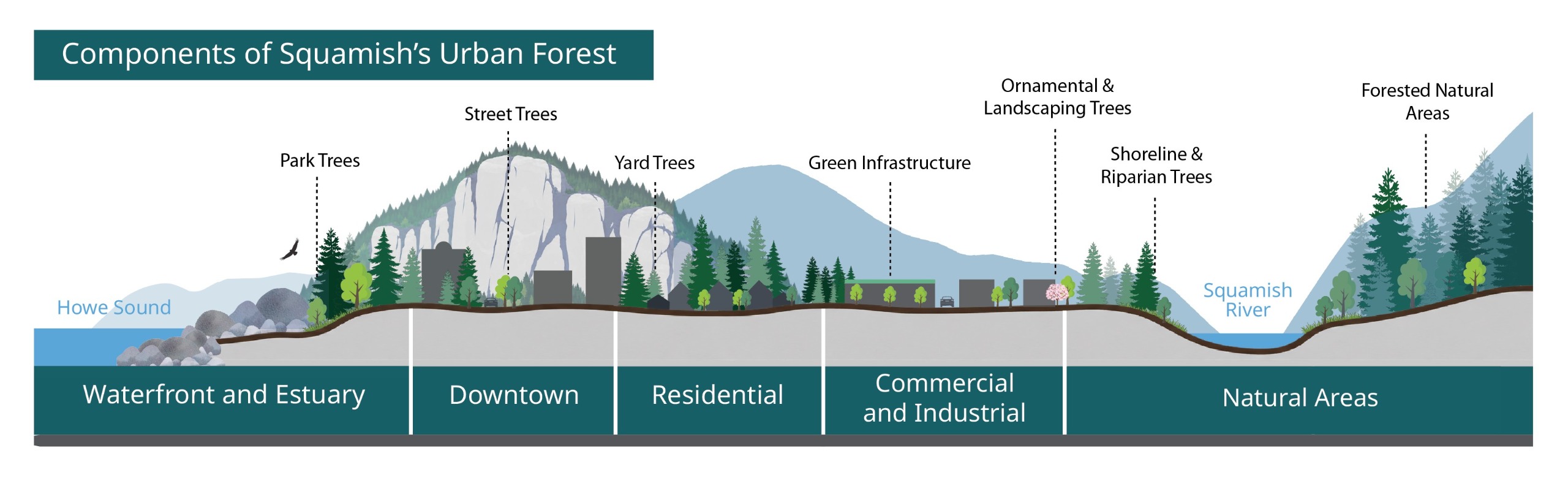
Squamish’s urban forest includes trees in yards, along streets, in parks and school grounds, beside rivers, and throughout natural areas. It includes trees on public and private land, together with the soils and other vegetation that support them.

Healthy trees need space to grow, good soil, water, and air. The Strategy will guide how the District protects and cares for existing trees, makes room for new ones, and supports healthy growing conditions so that Squamish’s urban forest benefits the community for generations to come.

Why is the urban forest important?

Trees contribute to community health, well-being and resilience. They:

  • Shade homes, streets and gathering places, helping keep people cool during hot weather.
  • Provide food and shelter for wildlife and connect habitats.
  • Intercept rainfall, absorb water and help reduce runoff and erosion.
  • Store carbon and remove carbon dioxide from the atmosphere as they grow.
  • Create welcoming spaces for recreation, social connection and time in nature.

  • Contribute to Squamish’s character, cultural connections and sense of place.

Your input will help shape the Strategy by identifying what you value about Squamish’s urban forest, what could be improved, and what should be prioritized for the future.

Community input will be considered alongside feedback from the Squamish Nation, District Council and staff, and interested groups.

Opportunities to get involved

  • Complete the community survey

    Tell us what matters to you about Squamish’s urban forest, the challenges you see, and where you think efforts should be focused through our community survey (coming soon). Your input will help shape the Strategy’s vision, goals, and actions for protecting, caring for, and planting trees.

  • Share places and nominate trees

    Use the mapping tool (coming soon) to share the places and trees you value, suggest locations for tree planting, or improvements and nominate heritage or significant trees.

    The District’s approach to recognizing heritage trees is guided by the Heritage Management Strategy.

  • Attend an open house

    Learn about the Urban Forest Management Strategy development, ask questions, and share your ideas at our Community Open House (more information soon). We look forward to meeting you there!